 By Independent News Roundup

In a recent double-blind, placebo-controlled crossover trial published in the European Journal of Nutrition, researchers tested a single 3-gram dose of a Beta vulgaris (beetroot) extract delivered as four chewable tablets containing dietary nitrate. Participants dissolved the tablets in the mouth to enhance nitrate conversion via the oral microbiome, and cognitive testing was performed 90 minutes later.
The results were striking.
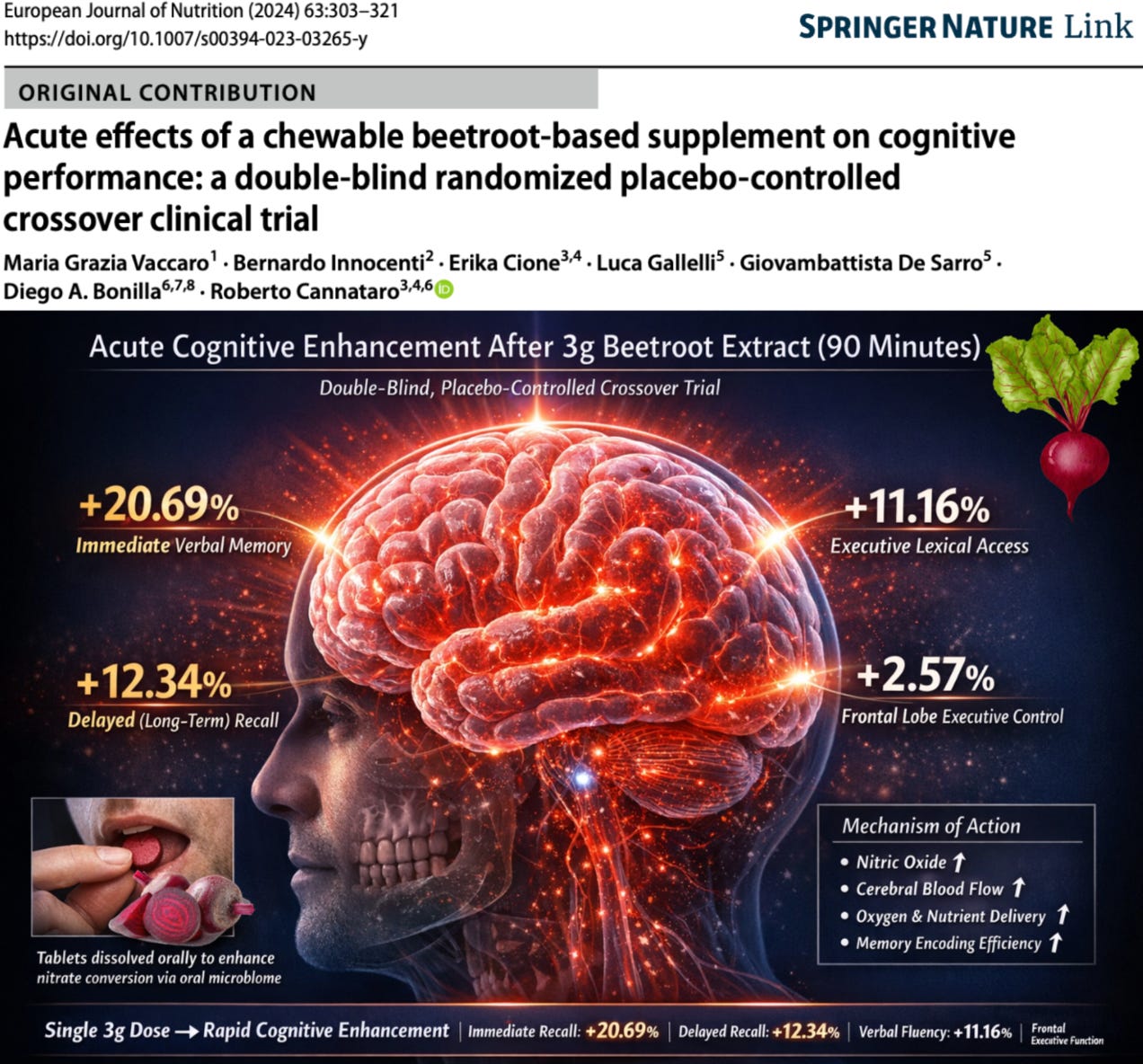
Immediate verbal recall improved by +20.69%, while delayed (long-term) recall increased by +12.34% compared to placebo. These are substantial acute shifts in the brain’s ability to encode and retain information — especially after a single exposure.
Executive function also improved. Verbal fluency rose by +11.16%, indicating enhanced lexical access and cognitive flexibility.
Frontal lobe function — responsible for abstraction, inhibitory control, and higher-order processing — increased by +2.57% .
Not every domain changed. Short-term digit span, working memory, and processing speed did not show statistically significant improvements. But the signal is clear: memory encoding, consolidation, and executive verbal output appear particularly responsive to acute dietary nitrate intake.
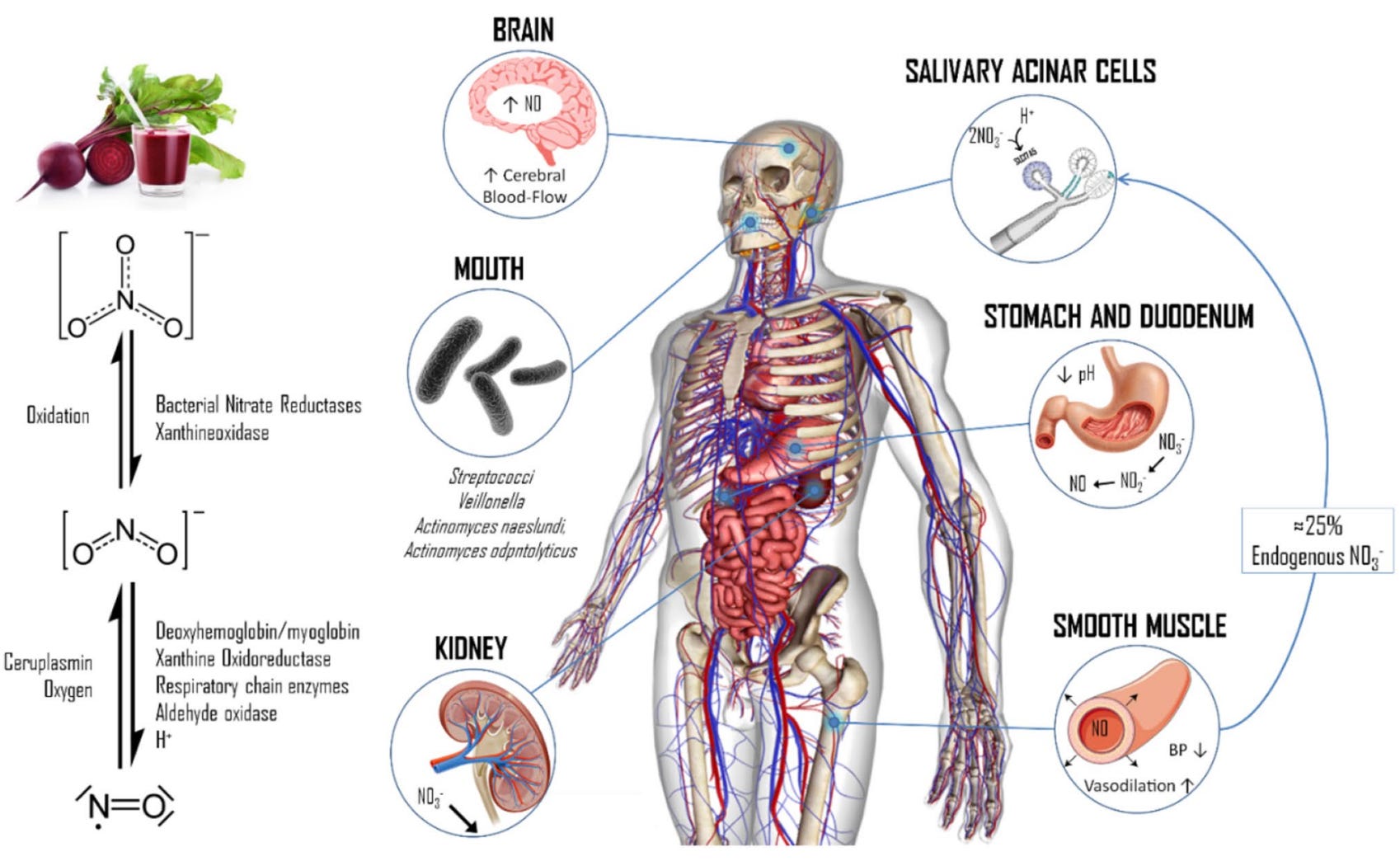
The proposed mechanism centers on nitric oxide–mediated increases in cerebral blood flow, potentially improving oxygen and nutrient delivery during memory formation. What stands out most is the speed of effect — measurable within 90 minutes in healthy adults.
In summary, a single 3g beetroot extract dose rapidly increased:
For a one-time, nutrition-based intervention, those percentages are hard to ignore.
Epidemiologist and Foundation Administrator, McCullough Foundation

.svg)