A
peer-reviewed study finds that a common backyard plant selectively
kills cancer cells while sparing normal cells, acting through multiple
coordinated anti-cancer pathways.
This
enourmous body of evidence underscores the urgent need to rigorously
investigate non-toxic therapies as viable anti-cancer agents.
A peer-reviewed study in Oncotarget
has documented one of the most extraordinary findings in
natural-compound cancer research: an aqueous extract of dandelion root —
the common backyard plant — reduced human colon tumor
growth in mice by more than 90%, showed zero toxicity after 75 days of
daily administration, and selectively killed cancer cells while sparing
normal cells entirely.
Dandelion root also destroyed more than 95% of colon cancer cells in vitro and activated multiple programmed-cell-death pathways simultaneously. No
synthetic chemotherapy drug achieves all of these effects at once —
which is why this study deserves far more attention than it received.
Tumor Growth Reduced by More Than 90%
In
immunocompromised CD-1 mice implanted with two different human colon
cancer lines (HT-29 and HCT116), oral dandelion root extract at 40
mg/kg/day dramatically suppressed tumor growth.
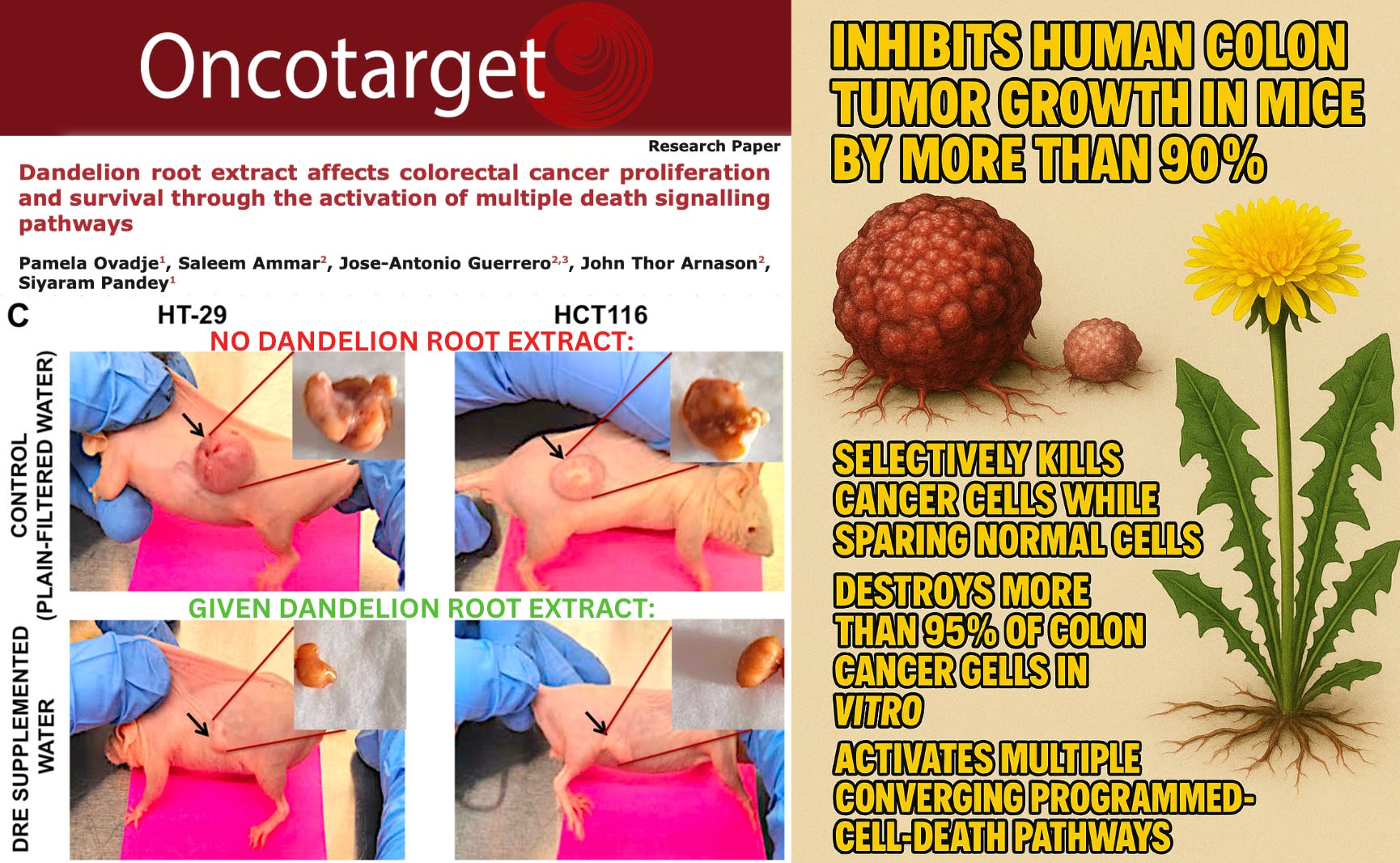
The treatment “retarded the growth of human colon xenograft models by more than 90%.”
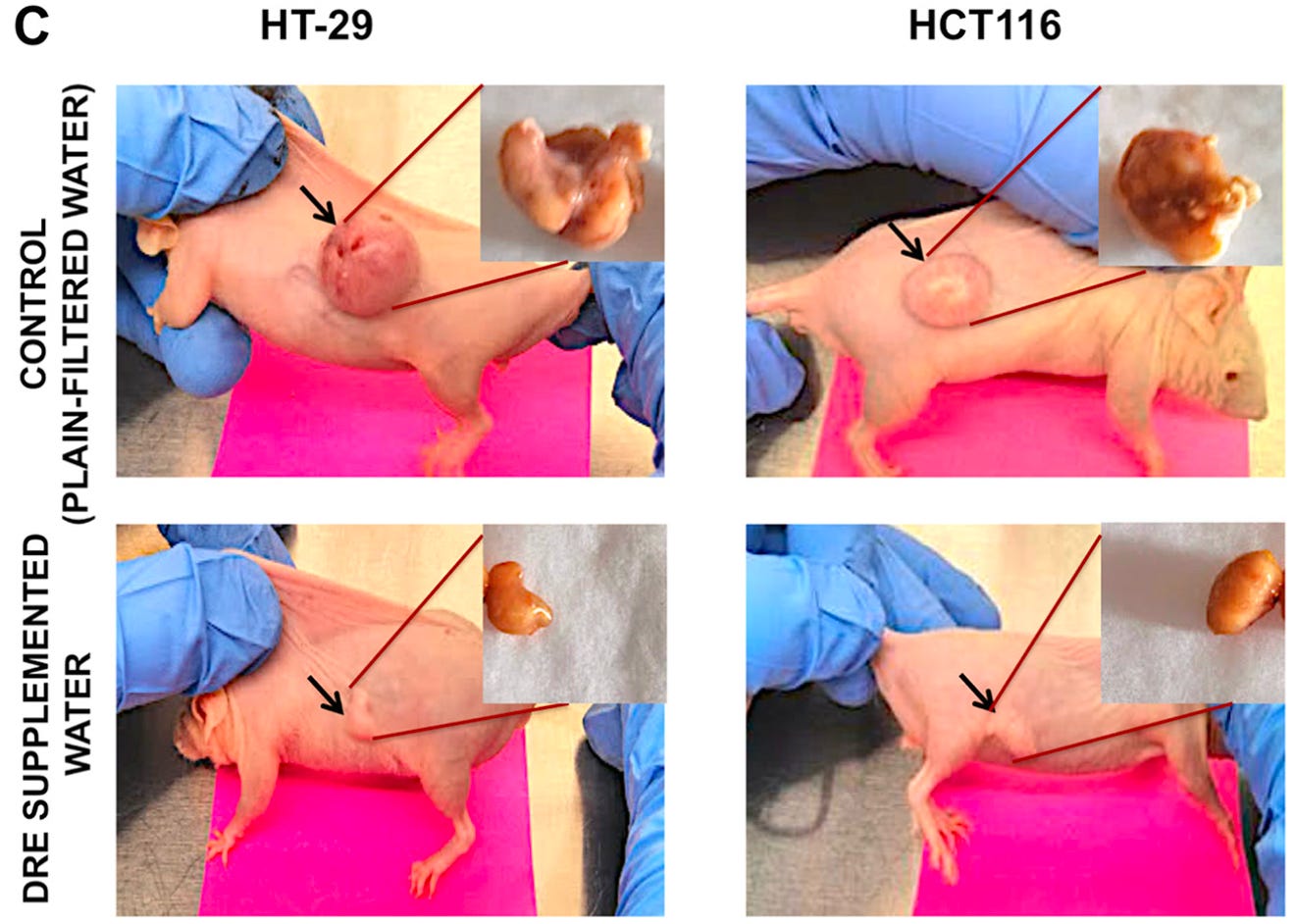
Figure 4
from the paper shows the difference visually: control mice developed
massive tumors, while DRE-treated mice barely formed any tumor mass at
all. Even late in the 75-day study, tumor volumes remained extremely
small.
No Detectable Toxicity After 75 Days of Daily Treatment
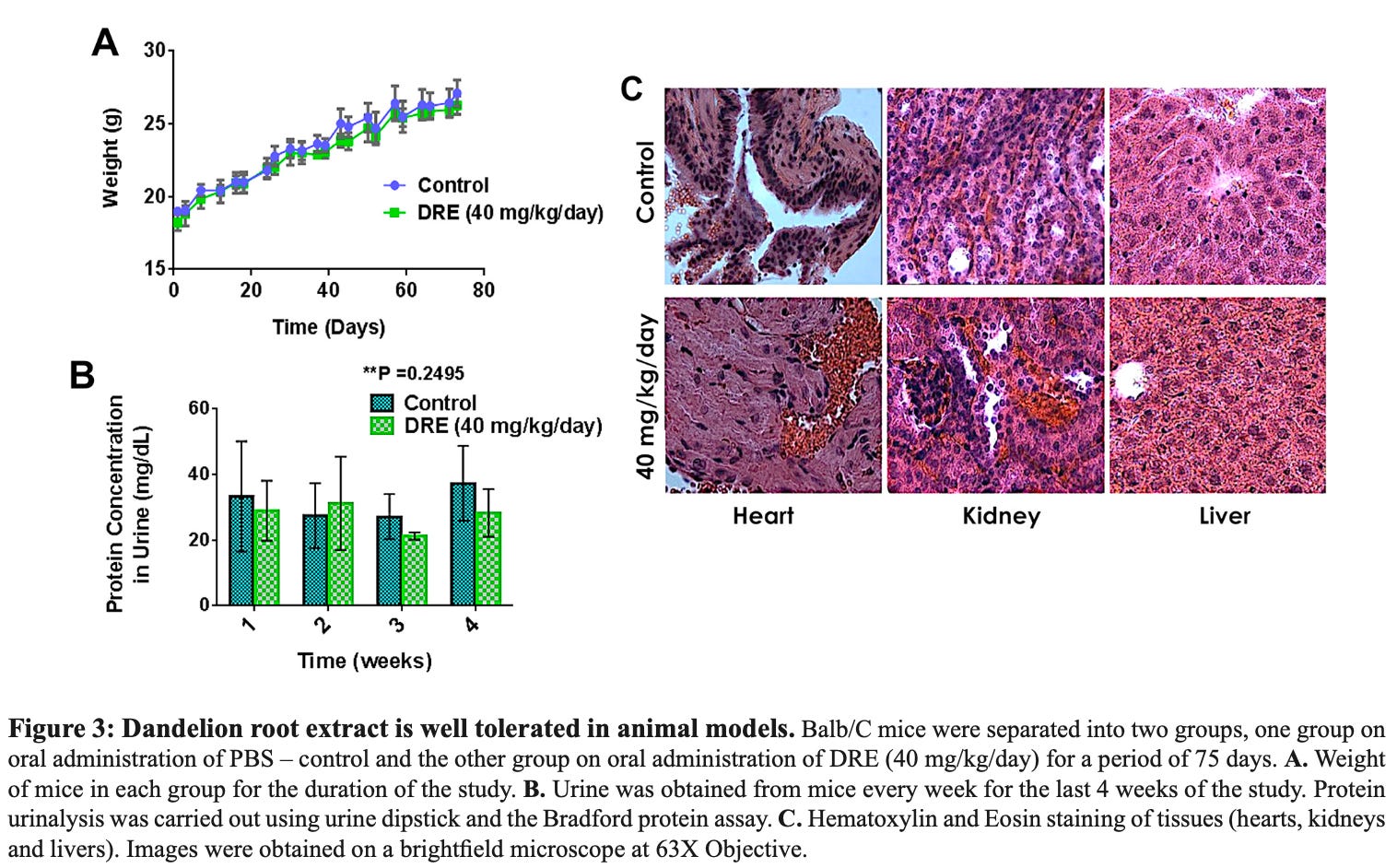
Before testing tumor effects, researchers conducted a long-term toxicity assessment for 75 days at 40mg/kg/day:
Weight curves of treated and untreated mice were identical.
Urinalysis showed no rise in kidney protein markers.
Histology of liver, kidneys, and heart showed no pathological changes.
In other words: DRE produced no observable harm,
even with long-term systemic exposure — a sharp contrast to standard
chemotherapy, which can cause multi-organ toxicity at far lower exposure
durations.
95% of Cancer Cells Dead in 48 Hours — Normal Cells Untouched
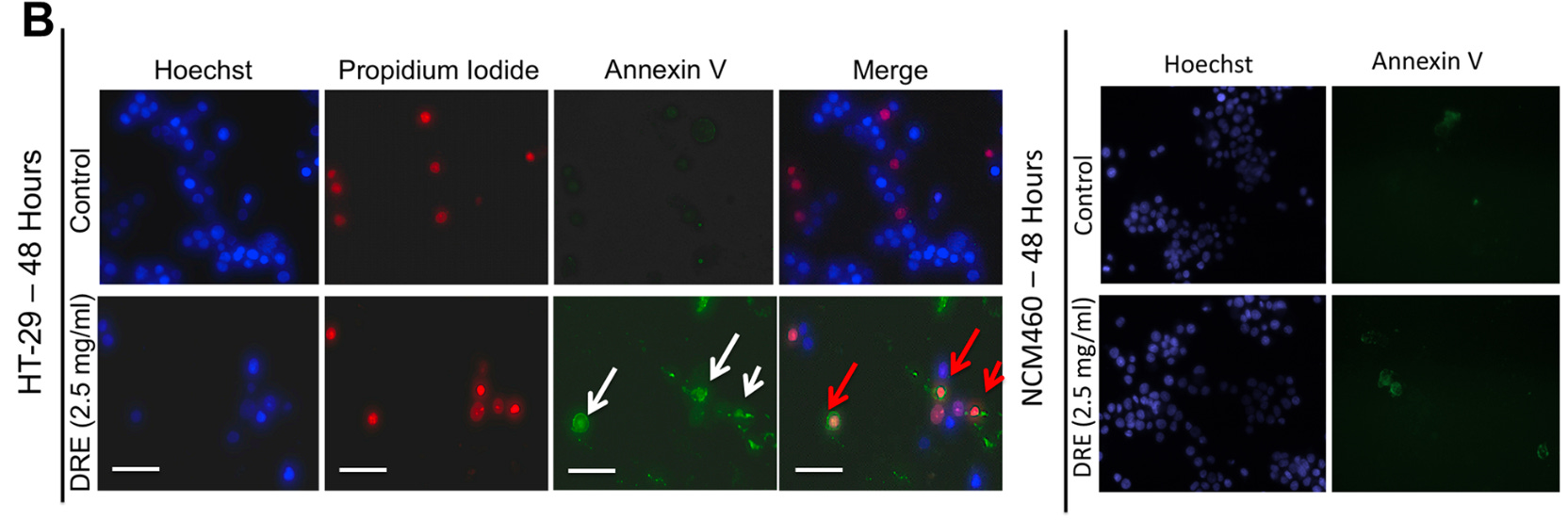
One of the most remarkable findings is the extract’s extreme selectivity: dandelion root extract killed more than 95% of colon cancer cells in vitro while leaving normal cells unharmed.
In vitro experiments showed:
HT-29 (p53-/-) and HCT116 (p53 WT) colon cancer cells: → Over 95% cell death within 48 hours
NCM460 normal colon epithelial cells: → No loss of viability, no apoptosis, and no mitochondrial disruption
Multi-Pathway Mechanism: Apoptosis, Mitochondria, ROS, and Gene Expression Shifts
The extract does not rely on a single mechanism of action — instead, it activates a cascade of cancer-cell vulnerabilities.
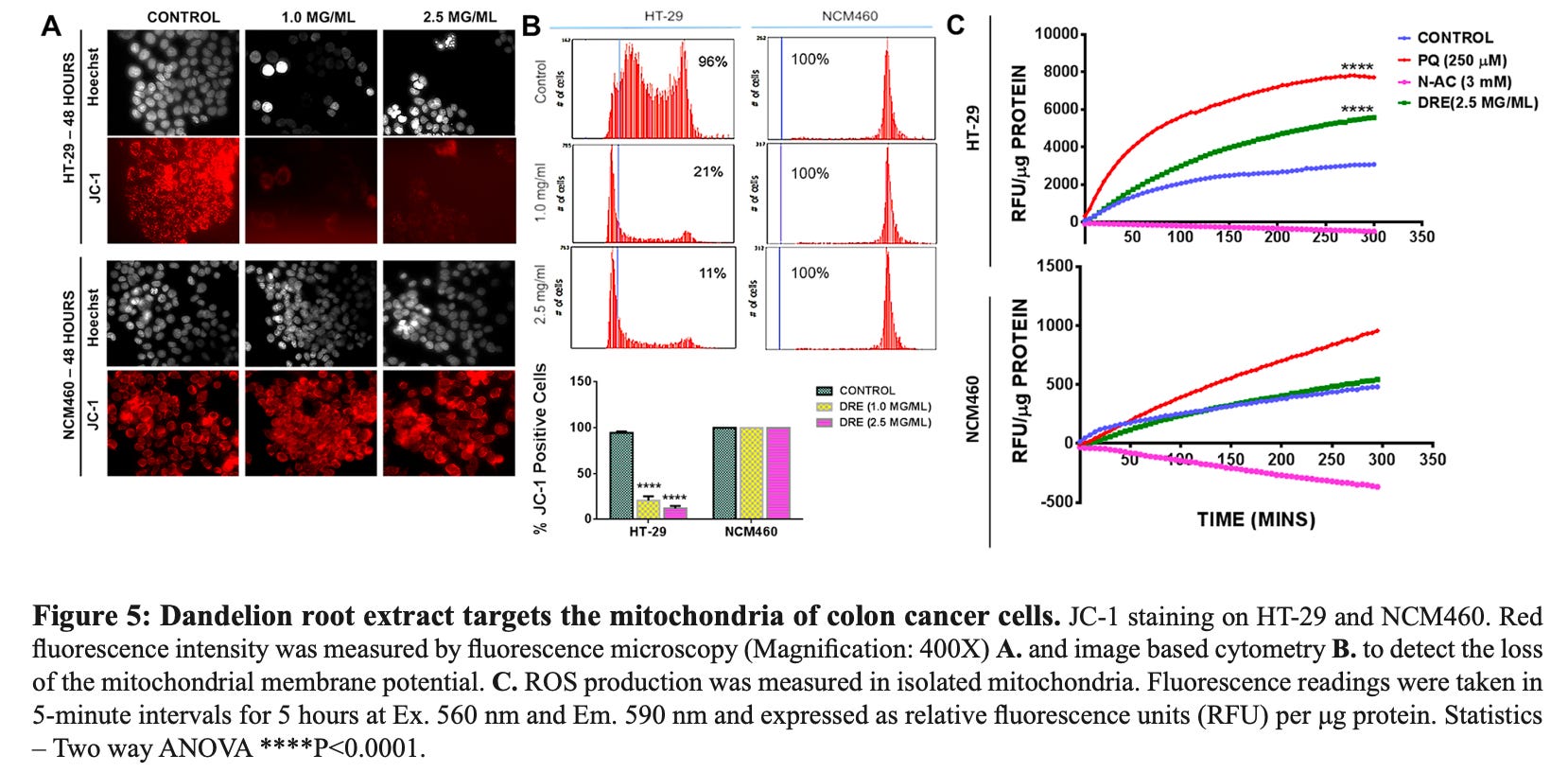
a. Mitochondrial membrane collapse
Cancer cell mitochondria rapidly lost membrane potential after treatment, while normal mitochondria remained stable.
b. Massive surge in ROS (reactive oxygen species)
Isolated mitochondria from cancer cells produced a spike of ROS when exposed to DRE — but normal mitochondria did not.
Cancer
cells often rely on fragile, dysregulated mitochondrial metabolism —
this extract appears to exploit precisely that weakness.
c. Activation of caspase-8 & apoptosis pathways
Although caspase-8 was activated, blocking caspase-8 did not prevent cancer-cell death, meaning DRE activates multiple redundant death pathways.
d. Major gene-expression shifts toward programmed cell death
The
extract upregulated pro-death genes in cancer cells (e.g., TNF, CASP1,
SNCA) while downregulating pro-survival genes such as Bcl-2 and PARP2.
Normal cells showed the opposite gene-expression pattern — a clear signature of differential susceptibility.
CONCLUSIONS
This study demonstrates that aqueous dandelion root extract:
Inhibits human colon tumor growth in mice by more than 90%
Exhibits no detectable toxicity during long-term administration
Selectively kills cancer cells while sparing normal cells
Destroys more than 95% of colon cancer cells in vitro
Targets mitochondrial vulnerabilities unique to cancer cells
These
findings were strong enough that Health Canada approved DRE for Phase I
cancer trials in 2012, according to the authors. Unfortunately, the
trial never advanced — patient recruitment stalled, no data were
published, and no active listing appears in Health Canada’s registry
today.
As a result, the remarkable anti-cancer effects seen in
vitro and in animal models have yet to be tested in humans. This is most
likely because a common backyard plant is not very profitable for the
Chemo Cartel.
With cancer rates continuing to climb, this non-toxic common plant deserves immediate clinical trials.
 By Independent News Roundup


.svg)