
A few years ago, when I was researching the story of a long suspected but officially undetected serial killer, I extensively consulted with a veteran criminalist at the Los Angeles County Sheriff’s Department Scientific Services Bureau. One day, as we were discussing one of the cases, she lectured me on the absolutely critical importance of recognizing how bias can distort our perceptions and our thinking about evidence.
“You have identified a woman whom you strongly suspect,” she said. “In fact, I’d say you have high conviction that she is the culprit. As you evaluate the evidence, you need to be fully aware of how your suspicion can make you biased in your interpretation. You must guard against this.”
The other skill I learned from her is the imperative to eliminate all social, ideological, and political considerations from the evaluation of evidence.
In a society governed by the rule of law, and not the will and whims of men, responsible adult citizens have a duty to overcome the archaic emotions of fear and loathing in order to make rational and just decisions. Fear is a critically important emotion for rapidly detecting and responding to mortal dangers and avoiding them in the future. Without fear, we wouldn’t have survived as a species
The trouble with fear is that it can take over the brain and suppress critical reasoning and perspective. Loathing is a related emotion, characterized by a feeling of disgust at a poisonous or disease-spreading creature such as a snake or a rat.
If a human individual or group becomes the object of fear and loathing, there is virtually no end to the crimes that other humans are capable of committing against them. This is why we must always guard against allowing our judgement to be impaired by the emotions of fear and loathing.
Yesterday my oldest friend texted me to push back on my post How to Vanquish the Radical Left Without Violating the Constitution. His initial texts turned into a phone conversation in which we discussed the incident.
I made it clear to him that I found the woman who was shot, and her wife, to be obnoxious and provocative in the extreme, obviously looking for trouble, and too stupid to recognize the high risk that they were going to get more trouble than they bargained for. I find their ideological posture and overheated emotions irritating in the extreme, and I consider the political establishment of Minneapolis to be loathsome.
However, in what may strike many of my readers as a paradox, when I know that I am in the grip of such powerful antipathy towards someone involved in a deadly incident, I endeavor to become all the more rigorous in my evaluation of what happened.
I do NOT do this out of some great sense of altruism, but as an intellectual discipline of setting aside my emotions and biases to ascertain the facts. Once I have committed to doing this exercise, the psychological, social, and political context becomes completely irrelevant. I cease thinking about these factors.
In the case of Renee Nicole Good, multiple ICE agents understandably lost their patience with her obnoxious provocations and wanted to arrest her. As they approached the car from different directions and commanded her to get out of the car, she reversed the car to gain a better radius to make a right turn, then put it into drive, and then tried to drive away.
It was only when the agents walked towards the car and commanded her to get out that she initiated driving away. In that instant, it became clear that her intention was to flee from the approaching officers.
She reversed back and to the left. With this maneuver, an officer who was standing slightly to the right of the car’s front side was then standing in front of the car. Unless there was glare on the windshield, it is likely he could see her face and see her turning her steering while to the right.
As she put the car into drive and lurched forward — probably distracted by the agent on her left, grabbing the outside door handle—the agent standing in front of her car did NOT jump out of the way, but planted his feet, drew his pistol, aimed, and fired through the front windshield.
Why did he shoot her instead of getting out of the way? He had to have known that shooting her in the head would NOT stop the car once it was moving forward, and indeed it didn’t stop the car.
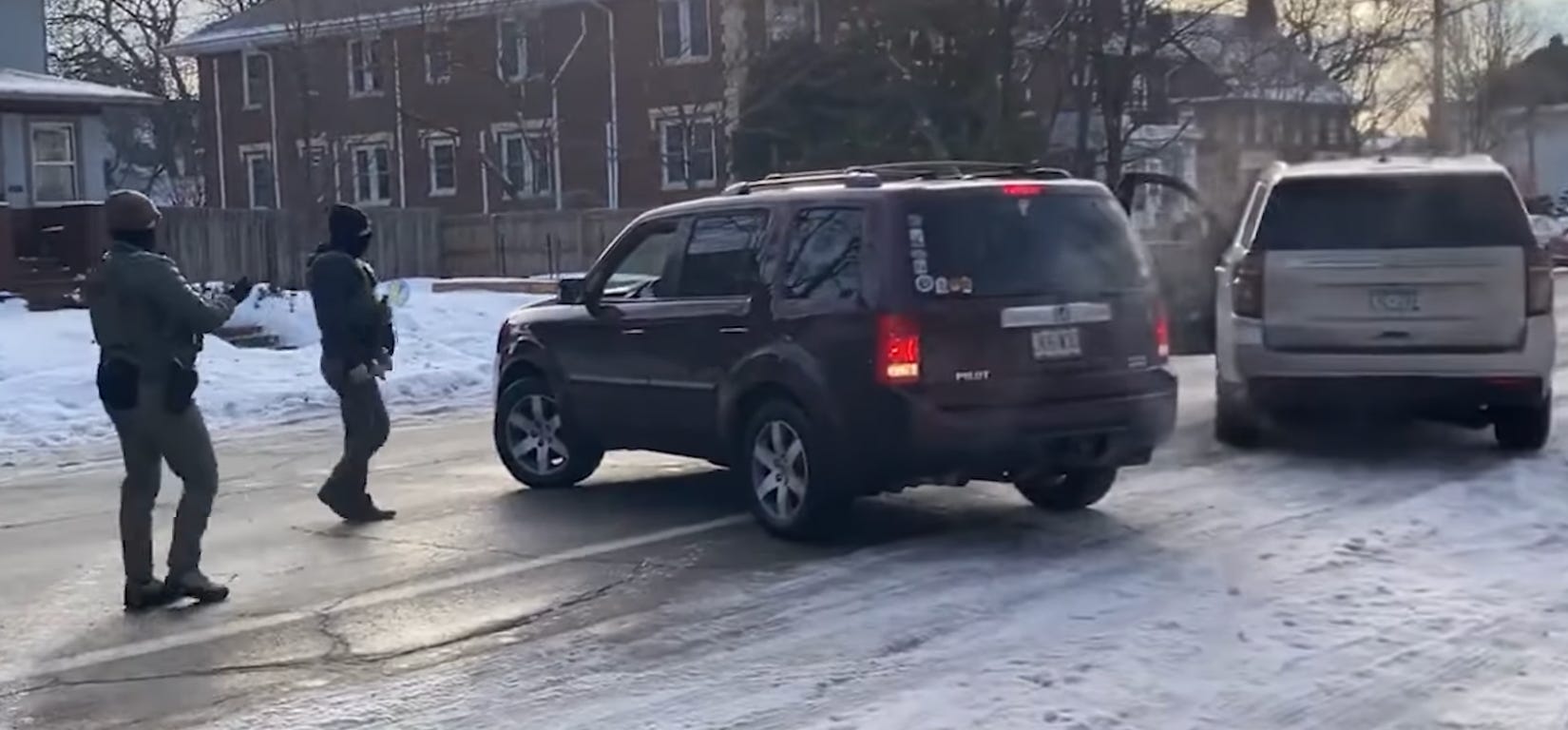
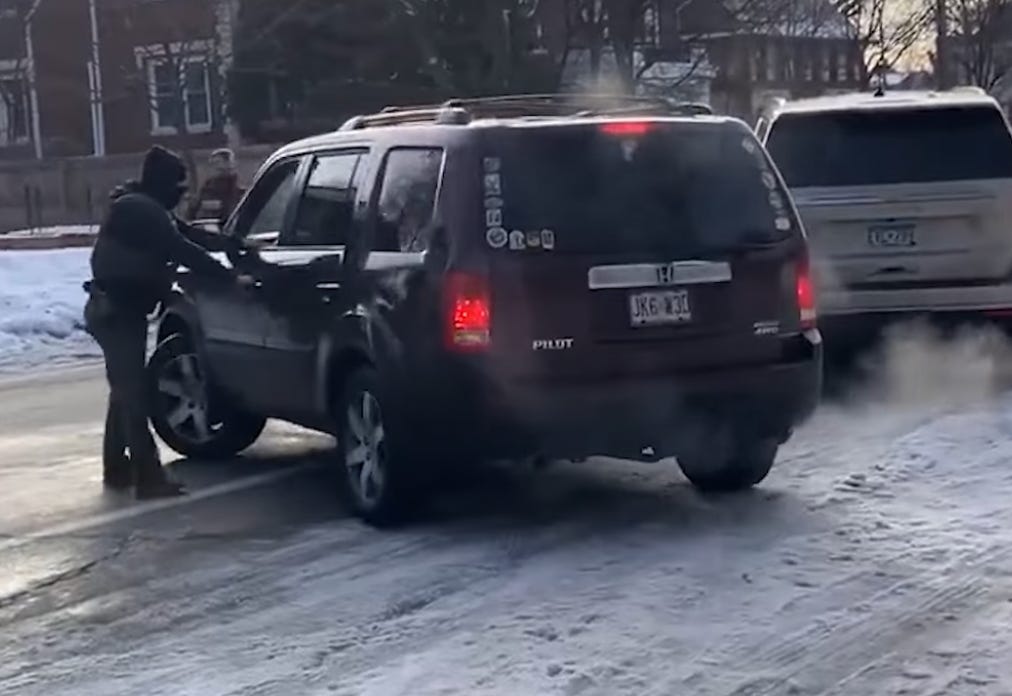
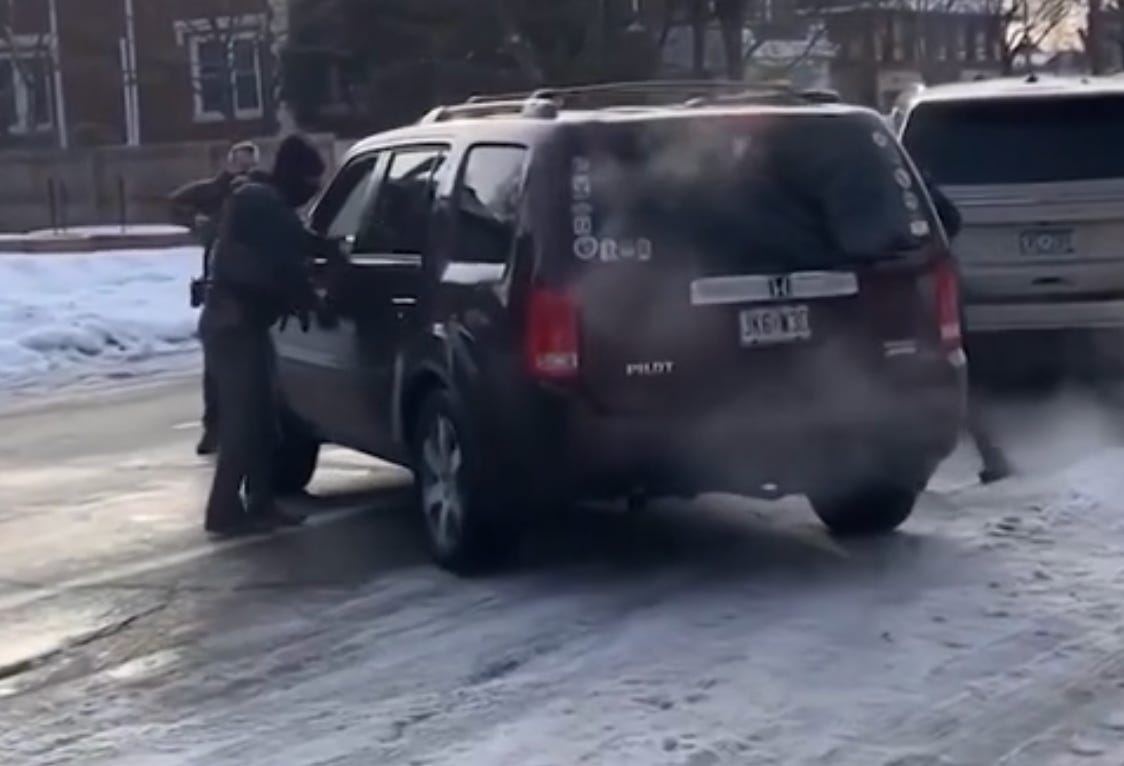
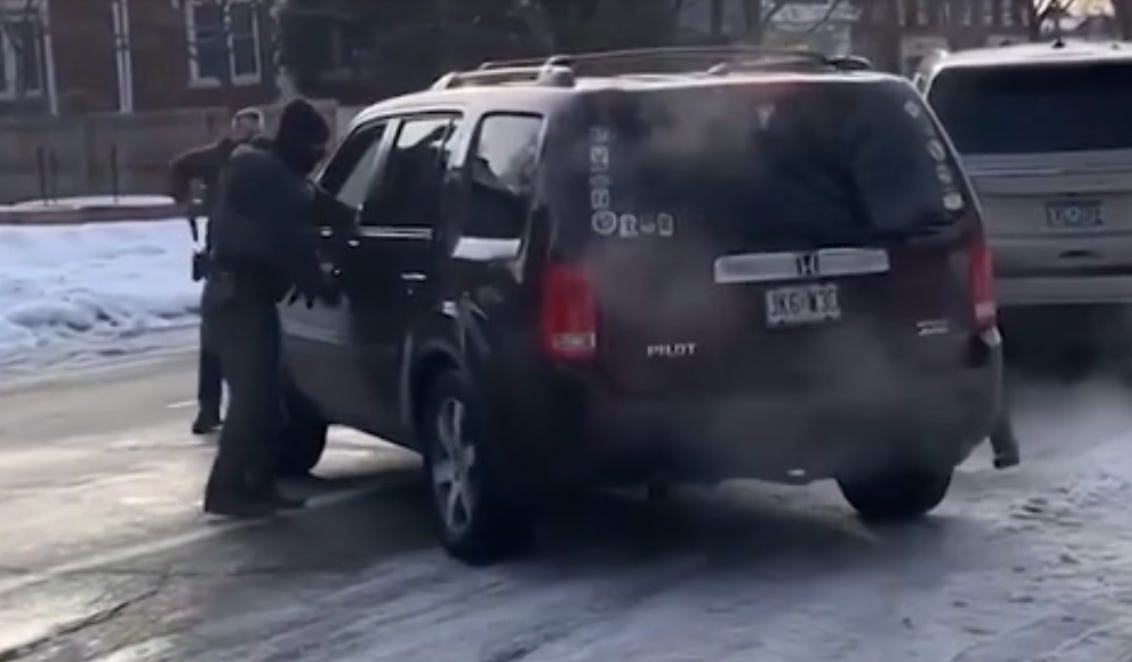
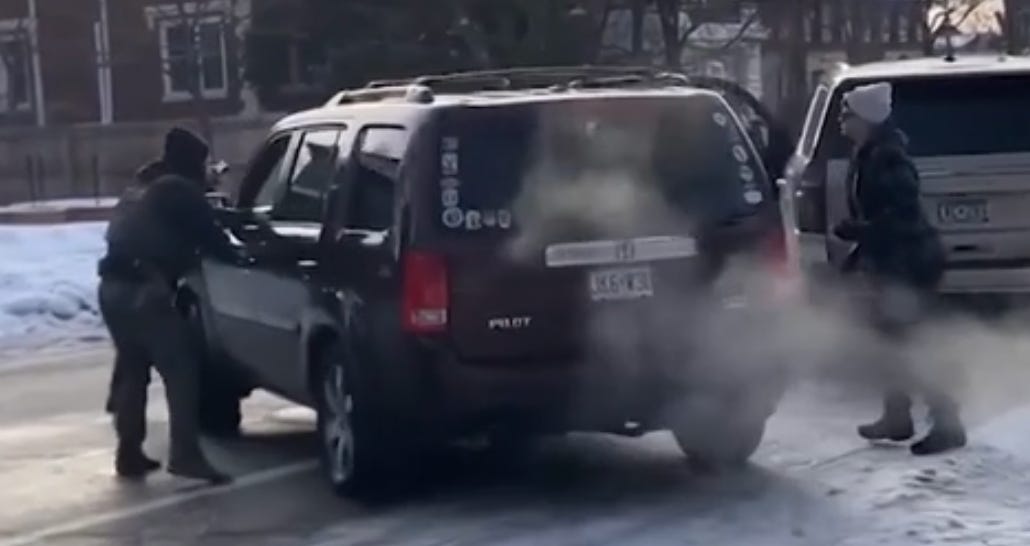
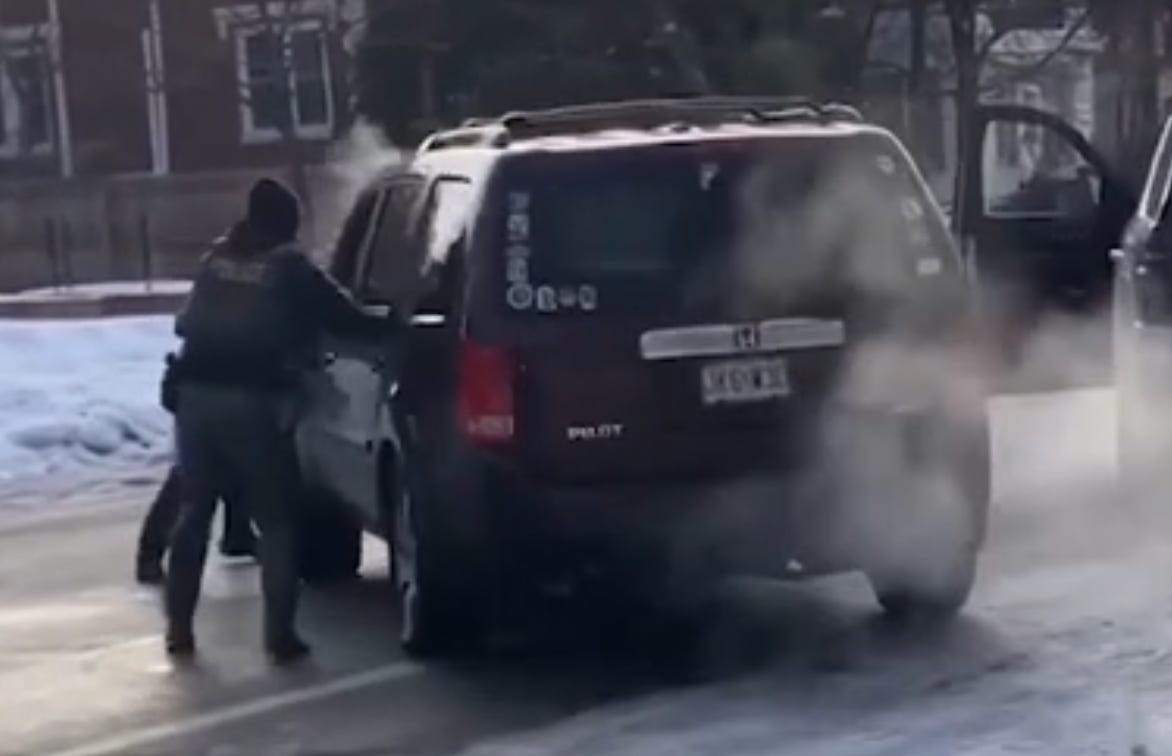
In other words, when the woman tried to flee, the officers tried to stop her from fleeing—with one even pulling on her door handle while she reversed the car and then put it into drive. In doing this, he placed himself at great risk of injury or death.
None of Renee Nicole Good’s behavior was justifiable, and she should have been arrested later for reckless endangerment of a federal law officer (federal statute 18 U.S.C. § 111, with prison time of up to 20 years or more).
However, as reckless as she was, the punishment for reckless endangerment is not the death penalty.
Given that she was trying to drive away, it is hard to understand why the ICE agents didn’t immediately move clear of the car. Regarding the officer who fired the shot: in the time it took for him to draw, aim, and fire, he could have jumped completely clear.
The ICE agents involved in this incident may be well-trained and prepared for the tough and demanding business of detaining illegal immigrants. However, their actions in handling a hysterical woman suggest they were not properly trained for dealing with protestors.

.svg)


 By Independent News Roundup