 By Independent News Roundup

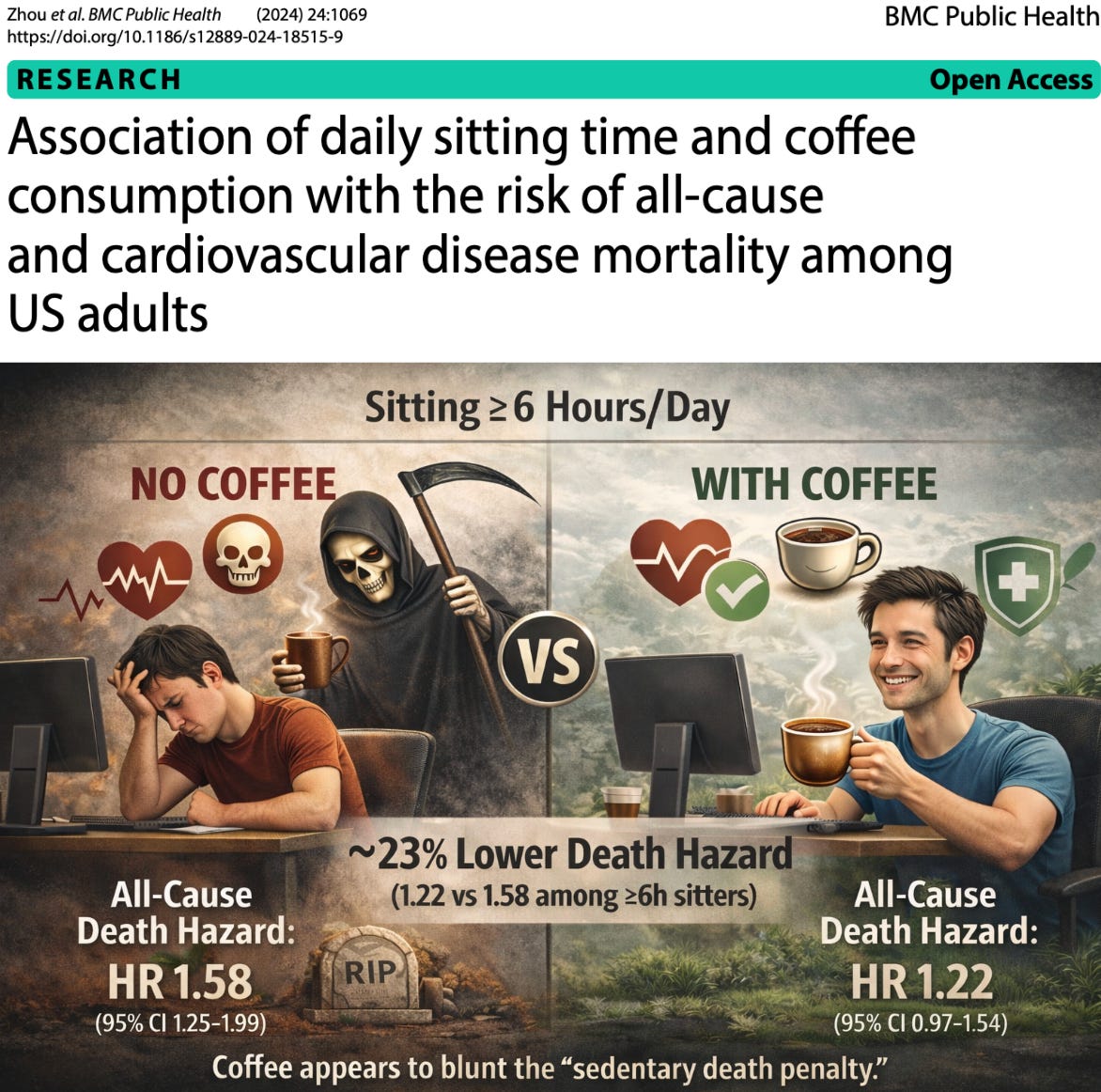
A recent National Health and Nutrition Examination Survey (NHANES) analysis suggests something surprising: coffee may “cancel out” the increased mortality risk seen in sedentary individuals that sit for long periods of time.
Researchers analyzed 10,639 U.S. adults (NHANES 2007–2018) with mortality follow-up through Dec 31, 2019 (up to 13 years). During follow-up, there were 945 deaths, including 284 cardiovascular deaths. They adjusted for major confounders—including age, sex, race/ethnicity, education, income, BMI and waist circumference, smoking, alcohol use, diet quality, hypertension, cholesterol, diabetes, cardiovascular disease, cancer history, and physical activity.
As expected, sitting was harmful:
Independent of sitting time, higher coffee intake was associated with lower mortality risk overall:
But the most important finding came from the joint analysis: prolonged sitting showed a clear mortality penalty in non–coffee drinkers, while that signal was markedly blunted in coffee drinkers:
This is consistent with coffee “canceling out” much of the sedentary death penalty.
This has biological plausibility: prolonged, uninterrupted sitting appears to impair glucose metabolism and increase inflammatory signaling (including higher pro-inflammatory markers and CRP), while coffee contains >1,000 bioactive compounds—including caffeine and polyphenols—with antioxidant and anti-inflammatory effects that may improve insulin resistance and dampen inflammation.
Your daily coffee may be doing more than boosting focus—it may be quietly helping protect your lifespan in a sedentary world. But movement is still essential, and more studies are needed to confirm whether coffee truly offsets sitting-related harm.
Epidemiologist and Foundation Administrator, McCullough Foundation

.svg)